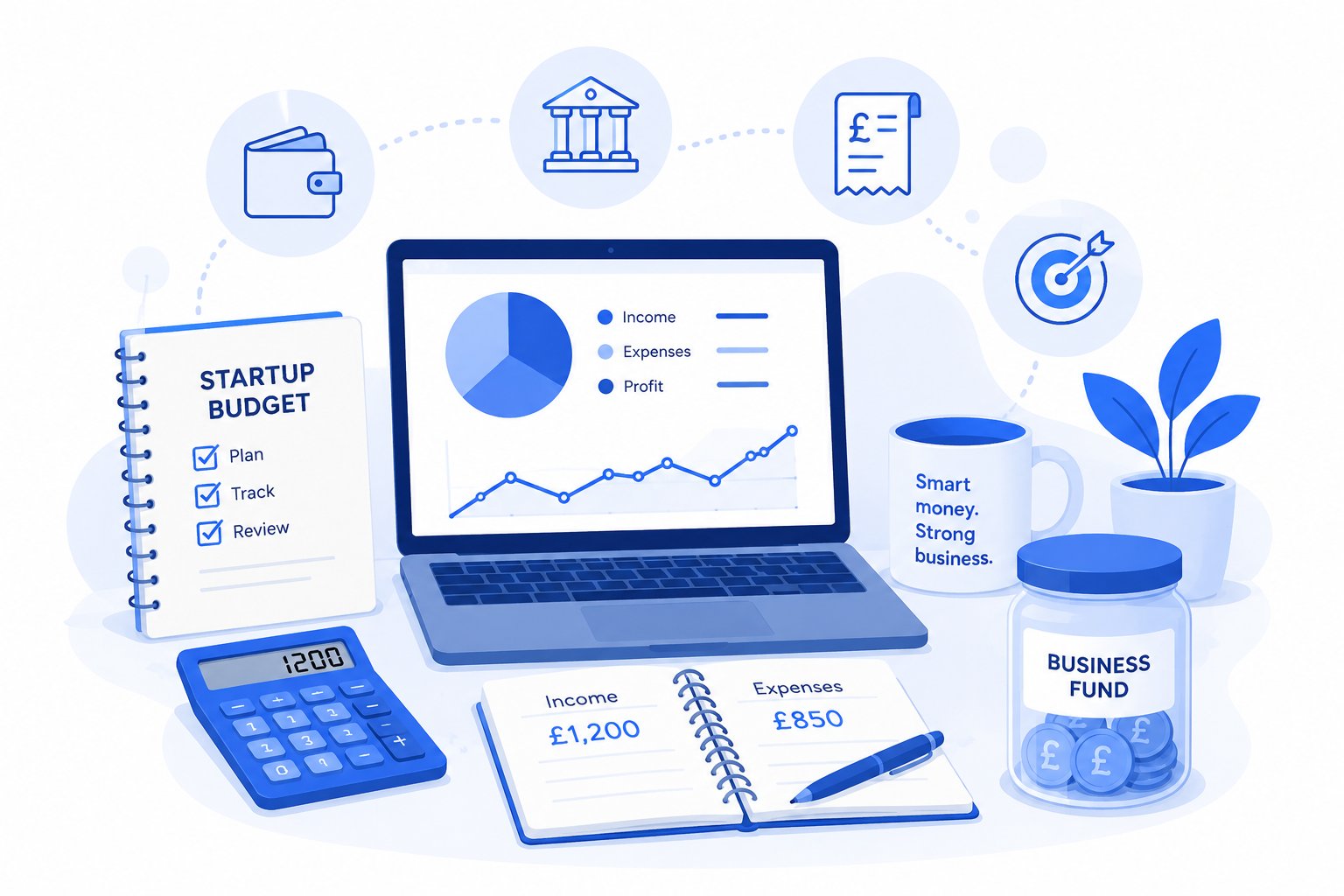
Many new business owners do not run into money problems because they are careless. They run into problems because they start without a clear picture of what money is coming in, what is going out, and what needs to be set aside.
When you are starting your first business, money can feel awkward to deal with. You may not know what to charge, how much to spend, what records to keep, or how to plan for tax.
You do not need a complicated finance system on day one. You do need a simple way to stay in control.
This is a practical starting point, not financial, tax or legal advice. Check the latest rules before you launch, and speak to an accountant or relevant professional if anything is specific to your situation.
What this helps with
This guide is for people starting a first business, side business, microbusiness or small service.
It will help you think through:
- what your business will cost to start
- how much money you need before you begin
- what to charge
- how to separate business and personal money
- how to keep simple records
- what to set aside for tax and other costs
- how to avoid spending too much too early
The aim is not to make everything perfect. The aim is to stop money feeling vague.
Why money management matters from the start
At the beginning, it is easy to focus on the idea itself.
You might be thinking about your name, logo, website, social media, equipment, products or first customers. Those things matter, but money sits underneath all of them.
If you do not understand your basic numbers, you may:
- undercharge and end up working for very little
- spend money before testing demand
- forget about tax, insurance or software costs
- mix personal and business money
- struggle to know whether the business is working
- feel busy but still not make enough
Good money management does not guarantee success, but it gives you a clearer view of what is really happening.
Start by listing your basic startup costs
Before you spend anything, write down what you actually need to begin.
Keep this list practical. Do not include everything you might want one day. Focus on what is needed to test a small version of the business.
Your startup costs might include:
- basic equipment or tools
- stock or materials
- insurance
- website or booking software
- payment processing fees
- packaging
- licences or registrations
- training or qualifications
- marketing materials
- travel costs
- professional advice
Some businesses need very little to test. Others, such as food, childcare, beauty, trades or regulated services, may need more checks, insurance, qualifications or approval before taking customers.
The useful question is:
“What do I need before I can offer this safely and properly?”
Not:
“What would make this look like a fully finished business?”
Separate business and personal money
One of the simplest ways to stay organised is to keep business money separate from personal money.
This does not need to be complicated. The main point is to avoid everything blending together.
When business income and personal spending are mixed, it becomes harder to see:
- how much the business has earned
- what you have spent
- whether you are making a profit
- what you may need to set aside
- which expenses relate to the business
A separate business account, or at least a clearly separated account for business activity, can make record keeping much easier.
It also helps you treat the business more seriously, even if it starts small.
Know the difference between sales and profit
Sales are not the same as profit.
If someone pays you £100, that does not mean you have made £100.
You may still need to cover:
- materials
- stock
- software
- packaging
- travel
- payment fees
- insurance
- tax
- your own time
A simple way to think about it is:
Sales minus business costs = profit before tax
This matters because many new business owners feel encouraged by sales but later realise there is less money left than expected.
When you price your offer, do not only ask, “Will people pay this?”
Also ask:
“Will this leave enough after costs to make the work worthwhile?”
Price with your costs in mind
Pricing can feel uncomfortable when you are new.
You may worry that people will think you are too expensive, especially if you are still building confidence. But if your price is too low, the business may become tiring very quickly.
Your price should take account of:
- the time involved
- materials or stock
- travel
- preparation and admin
- software or tools
- payment fees
- tax and other costs
- the value of the result to the customer
For a service business, remember to include the time customers do not see. A one-hour appointment may also involve messages, planning, setup, travel, notes, cleaning, invoicing or follow-up.
For a product business, include more than the cost of the item itself. Packaging, returns, postage, damaged stock, platform fees and your time all matter.
You do not need perfect pricing at the start. You need pricing that is based on real numbers, not guesswork.
Keep records from day one
Good records do not have to be fancy.
You need a clear way to track:
- money coming in
- money going out
- receipts and invoices
- dates
- customer payments
- supplier payments
- mileage or travel where relevant
- stock or materials where relevant
Some people start with a spreadsheet. Others use accounting software. The right choice depends on the size and type of business.
The important thing is to start early. It is much easier to record things as you go than to rebuild everything months later.
A simple weekly habit can help:
Once a week, update your income, expenses and receipts.
That small routine can save a lot of stress later.
Set money aside before you spend it
When money first comes into the business, it can be tempting to treat it as available.
But not all of it is really yours to spend.
Some may need to cover:
- tax
- National Insurance where relevant
- VAT if your business becomes VAT registered
- replacement stock
- software renewals
- insurance
- refunds
- quiet periods
- future equipment
A practical habit is to move a percentage of each payment into a separate pot for tax and future costs.
The exact amount will depend on your business, income, structure and personal situation, so it is worth getting advice if you are unsure.
The main point is simple: do not wait until a bill arrives before thinking about where the money will come from.
Watch your cash flow
Cash flow means the movement of money in and out of your business.
A business can look busy and still struggle if money leaves before enough money comes in.
For example:
- you may need to buy stock before customers pay
- clients may pay invoices late
- software costs may renew before you expect
- seasonal demand may change your income
- a quiet month may still have fixed costs
To manage this, keep a basic cash flow view.
Look ahead at:
- expected income
- regular costs
- one-off costs
- payment due dates
- quieter periods
- money already owed to you
This helps you make better decisions about spending, pricing and timing.
Avoid buying the “business owner starter kit”
It is easy to spend money trying to feel ready.
A new logo, website, course, software tool, packaging style, desk setup or camera can feel like progress. Sometimes these things are useful. Sometimes they are a way to delay the harder step: testing the offer.
Before you buy something, ask:
- Do I need this to serve my first customer?
- Will this help me make or manage money?
- Can I start with a simpler version?
- Is this urgent, or just nice to have?
- Have I tested enough demand to justify this cost?
Starting small does not mean being unprofessional. It means spending in the right order.
Plan for quiet periods
Most small businesses do not earn the same amount every month.
There may be busy periods, quiet periods, late payments, cancellations or unexpected costs.
This can be especially important if you are moving from employment into self-employment, where income may feel less predictable.
A simple safety habit is to build a buffer where possible.
That might mean:
- keeping some business money aside
- not taking every pound out as personal income
- reducing fixed monthly costs
- avoiding long contracts too early
- testing the business alongside employment before relying on it fully
You do not need a perfect financial cushion before doing anything, but you do need to understand your risk.
Pay yourself carefully
When the business starts earning, it is natural to want to take money out.
That is the point, eventually.
But at the beginning, it helps to be careful. Taking too much too early can leave the business short when bills, tax or replacement costs arrive.
Think about:
- what the business needs to keep running
- what must be set aside
- what you personally need
- whether income is regular or unpredictable
- whether upcoming costs are already covered
Depending on your business structure, how you pay yourself may work differently. A sole trader, partnership and limited company are not treated in exactly the same way.
For anything specific, speak to an accountant.
Review your numbers regularly
Money management is not something you do once and forget.
Set a simple monthly review.
Look at:
- total sales
- total costs
- profit before tax
- unpaid invoices
- upcoming bills
- best-selling services or products
- offers that take too much time for too little return
- spending that no longer makes sense
This helps you spot problems early.
You may find that one service is popular but not profitable. Or that a product sells well but takes too much time to package. Or that a monthly subscription is no longer needed.
The numbers help you make calmer decisions.
What the user gets or learns
By managing money from the beginning, you give yourself a clearer view of your business.
You learn:
- what it really costs to start
- whether your price makes sense
- whether the business is earning enough
- where money is being wasted
- what needs to be set aside
- whether the idea is realistic for your life
This will not remove every risk, but it can stop you from building your business on guesswork.
Practical next step
Before you spend more money, write a simple one-page money plan.
Include:
- your startup costs
- your monthly running costs
- your likely price
- how many sales or bookings you need to cover costs
- what you need to set aside
- what you can test before making bigger purchases
- what rules, insurance or registrations you need to check
This does not need to be perfect. It just needs to be clear enough to guide your next decision.