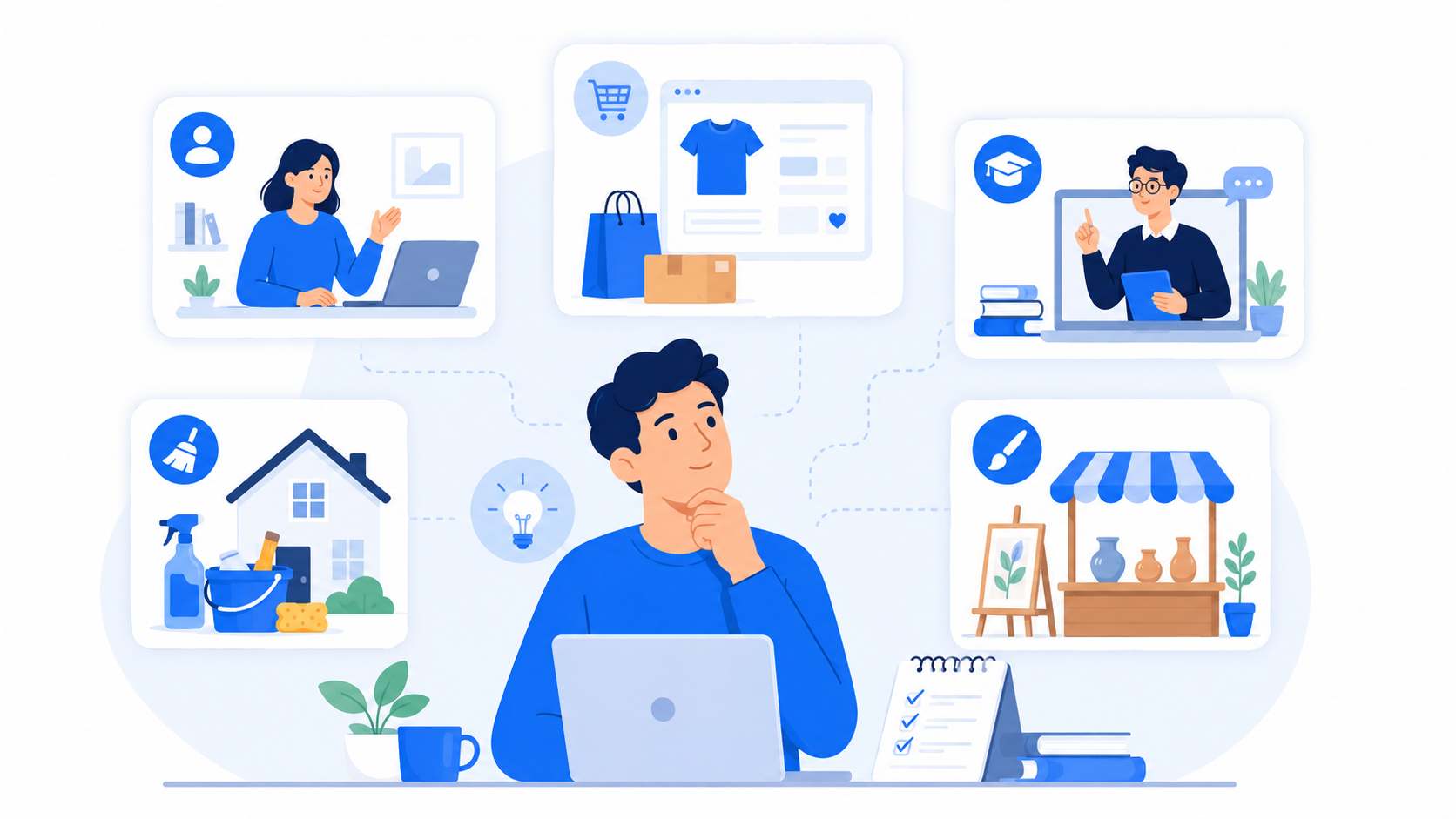
AI is changing how people work. It can draft, summarise, automate, organise and speed up many digital tasks.
But it does not remove the need for trust, taste, judgement, local delivery, customer care, physical services or human responsibility.
That matters if you are thinking about starting a small business. The question is not, “What business is completely AI-proof?” Very few things are untouched by technology. A better question is: “What kind of business still needs a real person to deliver value?”
The strongest ideas are often simple, practical and close to a real customer problem.
What makes a business more resilient in the age of AI?
A business may be more resilient when it depends on something AI cannot fully provide on its own.
That might include:
- Real-world delivery — the work happens in a home, garden, vehicle, venue, kitchen, shop or local area.
- Local presence — customers need someone nearby, reliable and available.
- Trust — the customer is letting you into their home, business, event, routine or personal life.
- Personal judgement — the work needs decisions, taste, care or context.
- Creativity and taste — the customer wants something that feels personal, well-chosen or made for them.
- Care and communication — people want reassurance, updates and someone who listens properly.
- Accountability — the customer needs a named person responsible for the result.
- Hands-on work — the task needs tools, equipment, movement, setup, cleaning, making, fixing or delivery.
AI can still support these businesses. It might help with admin, marketing, pricing, research or planning. But the main value still comes from the person doing the work.
Local service businesses
Local services are often a good starting point because the customer problem is clear. Someone needs help with something practical, nearby and repeatable.
Examples include:
- domestic cleaning
- garden maintenance
- mobile car valeting
- pet sitting, dog walking or pet visits
- home organisation
- laundry or ironing services
- handyman-style support, where suitable
- end-of-tenancy preparation
- local errands or practical support for busy households
These businesses are not always glamorous, but many are useful. They solve real problems for people who are short on time, energy or equipment.
The starting point is to be specific. Instead of “home services”, you might offer “weekly garden tidy-ups for busy homeowners” or “one-off home organisation sessions for spare rooms, cupboards and paperwork”.
Check whether your chosen service needs insurance, licences, qualifications or specialist approval before you begin.
Creative and personalised businesses
AI can generate ideas and images, but many customers still value personal taste, craft, care and a finished product they can actually use.
Creative business ideas include:
- cakes and baking
- personalised gifts
- event styling
- party decorations
- photography support
- design services
- handmade products
- printed stationery
- custom clothing or accessories
- content styling for small brands
The key is not just being creative. It is turning your creativity into a clear offer.
For example, “personalised gifts” is broad. “Personalised new baby keepsake boxes delivered locally” is easier to understand. “Event styling” is broad. “Simple table styling for small birthday meals and family events” is more concrete.
A creative business also needs practical thinking: pricing, materials, delivery time, customer approvals, deposits, changes and deadlines.
Admin and support businesses using AI carefully
Many small business owners are overwhelmed by admin. They may not need a full-time employee, but they do need help staying organised.
Possible ideas include:
- virtual assistant services
- inbox management
- diary and booking support
- content repurposing
- research support
- simple process documentation
- customer follow-up systems
- invoice chasing and admin tracking
- template creation
- basic reporting
AI can help with this type of business, but it should not be treated as a magic shortcut. Customers are not paying you simply to use a tool. They are paying for judgement, reliability and clearer systems.
A simple offer might be:
“I help sole traders organise their inbox, quotes and customer follow-ups for two hours a week.”
That is much stronger than saying, “I provide admin support.”
Businesses that help other small businesses adapt
Many small business owners know they should improve their online presence, systems or use of technology, but they do not know where to start. They may not want a consultant. They may just want someone practical who can help them get the basics sorted.
Business ideas in this area include:
- AI setup support for local businesses
- website updates
- Google Business Profile support
- basic marketing/admin packages
- simple email templates
- customer enquiry process setup
- online booking setup
- content planning support
- digital filing systems
- basic automation for repeat tasks
This can be a good route if you are organised, patient and able to explain things clearly.
The offer should stay grounded. For example:
“I help local service businesses set up a simple enquiry process, reply templates and Google Business Profile basics.”
That feels more useful than “AI transformation for small businesses”.
How to choose the right idea for you
A business idea may sound good online but still be wrong for your life.
Before choosing, ask yourself:
- How much time can I realistically give this each week?
- What budget do I have before the business earns anything?
- Do I want online work, local work, physical work or people-facing work?
- What skills do I already have?
- What equipment, space or transport would I need?
- Would I feel confident speaking to customers in this area?
- Can I test a small version before spending heavily?
A good first business does not have to be impressive. It has to be realistic enough to test.
You might start with one service, one type of customer and one simple way for people to enquire. That gives you a clearer path than trying to build a full brand before you know whether people want the offer.
Your next step
AI may change the way many businesses work, but it does not remove the need for practical help, trust and human judgement.
The best idea for you is not always the trendiest one. It is the one that fits your time, budget, skills, confidence and route to a first customer.
Use the Business Idea Finder to narrow ideas by your real-life situation, not just what sounds good online.
Then Browse Business Ideas to compare practical routes and find a starting point you can actually test.