How to start a domestic cleaning business
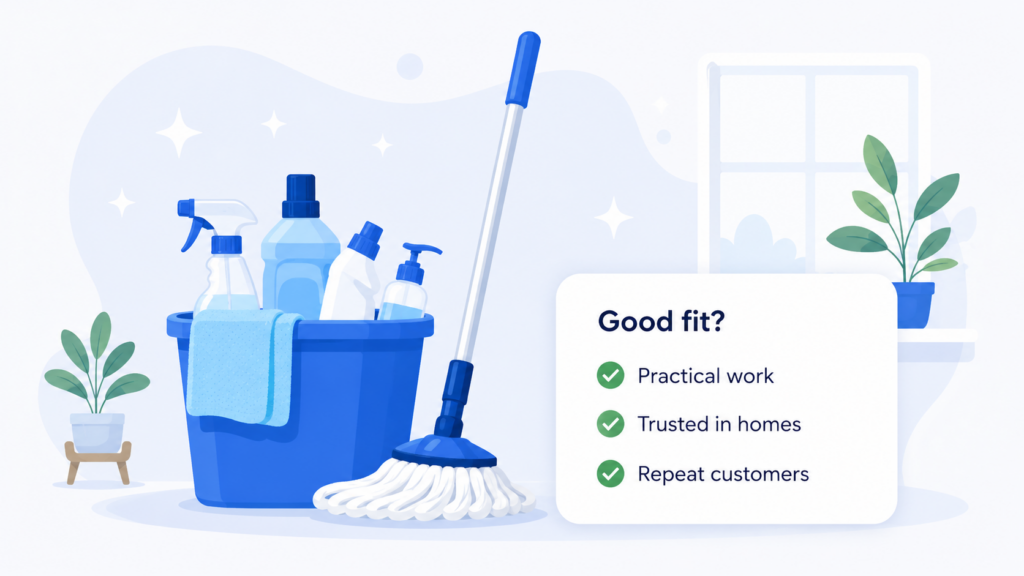
A domestic cleaning business can be a practical first business because the service is easy to understand, demand already exists, and you can often start small.
You do not usually need a shop, a large team or a complicated setup to begin. But that does not mean it is effortless. Cleaning is physical work, and customers need to trust you in their home. Reliability, clear pricing, sensible admin and good communication matter from the start.
This page will help you understand whether a domestic cleaning business could fit your time, budget, skills and confidence.

Startup Cost
Low to moderate
Can start part-time?
Yes

Works from home?
Admin from home, work at customer homes

Best for
Practical, reliable people who are comfortable working in customers’ homes

Main challenge
Trust, consistency, pricing and getting first customers
Is a domestic cleaning business a good idea?
A domestic cleaning business can be a sensible starting point because the need is clear. Many households already pay for help with cleaning, especially when they are busy, moving home, managing rental properties or preparing short-let accommodation.
It is also a business you can test locally. You can start with one clear service, speak to people nearby, and learn what customers actually want before spending too much money on equipment, branding or systems.
Another benefit is repeat work. A regular weekly or fortnightly clean can give you more predictable income than one-off jobs alone.
But it is not easy money. Cleaning is physical, standards matter, and customers will expect you to turn up on time, communicate clearly and respect their home. The business is simple to explain, but it still needs proper care.

Who domestic cleaning businesses could suit
A domestic cleaning business may be a good fit if you:
- want a practical local service business
- are comfortable with hands-on work
- can be reliable and punctual
- prefer clear tasks over abstract work
- want something that can start small
- are comfortable speaking to customers
- can manage repeat bookings and regular standards
- want a business with lower startup costs than many product or premises-based ideas
You do not need to have everything perfect on day one. You do need to be consistent, clear and trustworthy.
Who it may not suit
Domestic cleaning may not be the right fit if you:
- strongly dislike physical work
- do not want to travel to customer homes
- need fully remote work
- struggle with consistency or punctuality
- dislike dealing with customer expectations
- want a business with no time-for-money element
- are not comfortable being trusted in someone’s home
This does not mean you cannot start a business. It means another type of business may fit your situation better.
Is a domestic cleaning business right for you?
Answer a few quick questions to see whether domestic cleaning could fit your time, confidence, setup and working style.
This is not a pass or fail test. It is a simple way to check whether this idea is worth exploring, whether you should start small, or whether another business idea may fit you better.

What services could you offer as a domestic cleaner?
It is better to start narrow than offer every cleaning service straight away. A clear starter service is easier to price, explain and deliver.
Regular Cleaning
Fornightly Cleaning
End-of-tenancy Cleaning
Move-in-move-out Cleaning

Ironing add-on
Oven Cleaning
Quick Links
Take the Business Idea Quiz
Browse More Business Ideas
Free Tools & Templates
Want the step-by-step version?
The domestic cleaning launchpad gives you everything in one place.
- Launch checklist
- Equipment checklist
- Pricing guide
- Customer Scripts
- Flyer & Social templates
- Business profile setup
What do you need to start?
You do not need a complicated setup, but you do need the basics in place before taking paid work.
Equipment and supplies
Depending on your service, you may need:
- cleaning cloths
- sprays and cleaning products
- gloves
- mop and bucket
- vacuum cleaner, if not supplied by the customer
- apron or practical work clothing
- caddy or carry bag
- bin bags or small supplies, depending on what you include
Some cleaners start by using the customer’s products and equipment. This can reduce upfront cost, but you should still be clear about what is included and what the customer needs to provide.
Admin
You will also need:
- a business name
- a simple price list
- a booking process
- a customer information form
- basic terms and cancellation policy
- invoice or payment method
- a way to record income and expenses
This does not need to be fancy. A simple system you actually use is better than a complicated one you avoid.
Trust and safety
Customers are inviting you into their home, so trust matters. Think about:
- public liability insurance
- a DBS check, if useful for your customer type
- references or testimonials
- clear customer communication
- safe use of cleaning products
- a key-holding policy, if you will hold customer keys
- what work you will not accept
You should also be prepared to say no to unsafe, unclear or unsuitable jobs.
How much does it cost to start?
The cost depends on how you choose to set up.
Low-cost version
A low-cost version may involve:
- customers providing products and equipment
- you providing labour, reliability and communication
- a simple booking process
- basic record keeping
- free or low-cost ways to find first customers
This can be a realistic way to test the idea before spending heavily.
More polished version
A more polished setup may include:
- your own cleaning products
- branded work clothing
- public liability insurance
- a basic website or hosted business profile
- printed flyers or cards
- a clearer booking and customer message process
💡Before you spend
Avoid buying lots of equipment before you know what type of cleaning work you are actually going to offer. A regular home clean, deep clean and end-of-tenancy clean may need different tools, pricing and time.
Use this simple calculator to estimate what you might need to spend before starting a domestic cleaning business.
This is only a rough planning guide. Your actual costs will depend on what you already own, whether customers provide products or equipment, your local area, insurance choices and how polished you want your first setup to be.
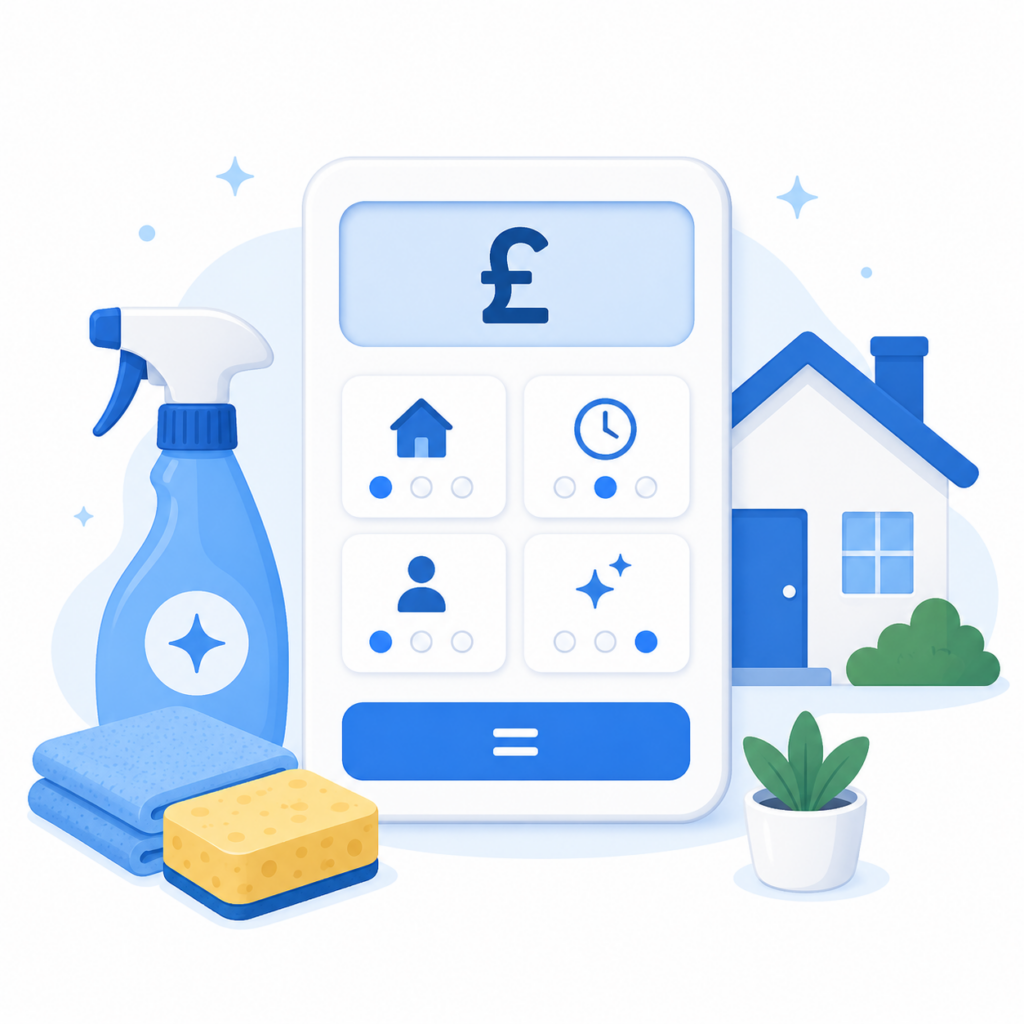
This estimate does not include tax, National Insurance, unpaid cancellations, replacement equipment, ongoing products needed, every travel cost, accountant fees or all possible insurance needs. It is a rough planning tool, not financial, tax or insurance advice.
How much can you charge?
There is no single right price. Your price needs to reflect the time, work, travel, products, customer expectations and local market.
Common pricing options include:
- hourly rate
- fixed price per clean
- deep-clean package
- end-of-tenancy package
- add-ons
- minimum booking length
Charging too little can make the business hard to sustain. It can also lead to rushed work, awkward conversations and resentment. Your price should be clear enough that both you and the customer know what is included.
Starter pricing questions
Before setting your price, ask:
- How long will the job take?
- Are products included?
- Is travel included?
- Is it regular or one-off?
- Is it a standard clean or a deep clean?
- Is there a minimum booking?
- Will you need extra time for the first visit?
- What happens if the job is bigger than expected?
How to get your first customers
Your first customers do not need to come from a perfect brand or expensive advertising. They usually come from clear communication, trust and a simple offer.
👨👩👧👦 telling friends, family and local contacts what you offer
📱posting in local Facebook groups
🃏delivering flyers in targeted local areas
🏠speaking to estate agents or property managers
🤝asking for referrals
📊setting up a Google Business Profile
🏢contacting local landlords or Airbnb hosts
⭐asking early customers for reviews
Do not wait until your branding is perfect. A clear offer, simple price and reliable communication matter more at the start.
A useful first message could be:
I’m starting a local domestic cleaning service for households who need regular weekly or fortnightly help. I’m taking on a small number of first customers and can offer standard cleans, with clear pricing and agreed tasks before the first visit. Message me if you’d like to check availability.
What your first offer could look like
Regular home clean
For busy households who want weekly or fortnightly help with basic cleaning tasks.
This kind of offer makes the business easier to explain. It also helps you avoid vague jobs where the customer expects one thing and you expect another.
Includes
- kitchen surfaces
- bathroom cleaning
- dusting
- vacuuming
- mopping
- general tidy of agreed areas
Does not include
- oven cleaning
- carpet cleaning
- mould removal
- heavy lifting
- specialist cleaning
- biohazard or unsafe conditions
- tasks not agreed before the booking
Common mistakes to avoid
A domestic cleaning business can become stressful if the basics are unclear. Watch out for these common mistakes:
- offering too many services at once
- charging too little because you feel awkward
- not setting a minimum booking
- agreeing to vague jobs without a checklist
- not clarifying what is included
- relying only on word of mouth
- buying too much equipment too early
- taking on unsafe or unsuitable work
- not keeping income and expense records
- not asking for reviews
- forgetting to confirm access, parking or keys
- failing to explain your cancellation policy
Legal, insurance & admin basics
There are some practical basics to check before you launch.
You may need to:
- register as self-employed or choose another suitable business structure
- keep records of income and expenses
- consider public liability insurance
- check whether a DBS check would help build trust with your customer type
- use cleaning products safely
- understand the risks of holding customer keys
- have basic terms covering cancellations, payment and what is included
- check current rules before taking paid work
This is a practical starting point, not legal, tax or insurance advice. For anything specific to your situation, speak to a qualified professional such as an accountant, solicitor, insurer or relevant adviser.
Want the step-by-step version?
If domestic cleaning feels like a possible fit, the Yawise Domestic Cleaning Launchpad gives you the practical starting pieces in one place.
Inside the launchpad, you get:
- launch checklist
- equipment checklist
- pricing guide
- first customer scripts
- flyer and social post templates
- customer message templates
- simple terms checklist
- hosted business profile setup
The aim is to help you move from “I could do this” to “I know what to do next”.
Starting a cleaning company FAQs
It depends on how you set up. A low-cost version may involve customers providing products and equipment while you focus on labour, reliability and bookings. A more polished version may include your own products, insurance, branded clothing, printed materials and a hosted business profile.
Start small where possible. Avoid buying lots of equipment before you know what type of cleaning work you want to offer.
You can start without formal business experience, but you still need to be able to clean to a reliable standard, communicate clearly and manage customer expectations.
Begin with simple services you can confidently deliver. Do not offer specialist cleaning unless you have the right skills, equipment and safety knowledge.
Public liability insurance is worth considering because you will be working in other people’s homes. It can help protect you if something goes wrong.
Insurance needs vary, so check what is suitable for your situation before you begin.
You may need to register as self-employed or choose another business structure, depending on how you trade and your situation. Check the current rules before you start taking paid work.
For anything specific to your tax position, speak to an accountant or qualified adviser.
Both can work. Hourly pricing is simple, especially when you are new and still learning how long jobs take. Fixed pricing can be clearer for customers, but you need to understand the work properly so you do not undercharge.
Whichever model you choose, be clear about what is included, how long the booking lasts and what costs extra.
Start with people who already know or trust you, then build outwards. Tell local contacts, ask for referrals, post in local groups, use Nextdoor, create a Google Business Profile and ask early customers for reviews.
Your first offer should be simple enough for people to understand quickly.
It may be possible if you work very locally, use public transport, cycle or focus on customers who provide equipment. A car can make things easier, especially if you carry products or work across different areas.
Think carefully about travel time, parking, carrying equipment and whether the setup is realistic.
Some cleaners ask customers to provide products and equipment, especially at the beginning. Others bring their own so they can control quality and consistency.
Either option can work, but it must be clear before the first clean. Customers should know what you provide and what they need to have ready.
It can be, especially if you want practical work, local customers and a business that can start with limited upfront cost. It may fit around other commitments if you keep your availability realistic.
The main challenge is consistency. Customers will expect you to turn up at agreed times and keep a regular standard.
Avoid offering too much too soon, charging too little, taking vague bookings, skipping basic terms, buying too much equipment early and accepting unsafe work.
Start with one clear service, a simple price structure and a reliable way for customers to enquire.
Starting a cleaning company
You do not need to build the perfect cleaning business on day one. Start with one clear service, one simple price and one way for customers to enquire.
Once you have real conversations with real customers, you can improve your offer, pricing, systems and profile.