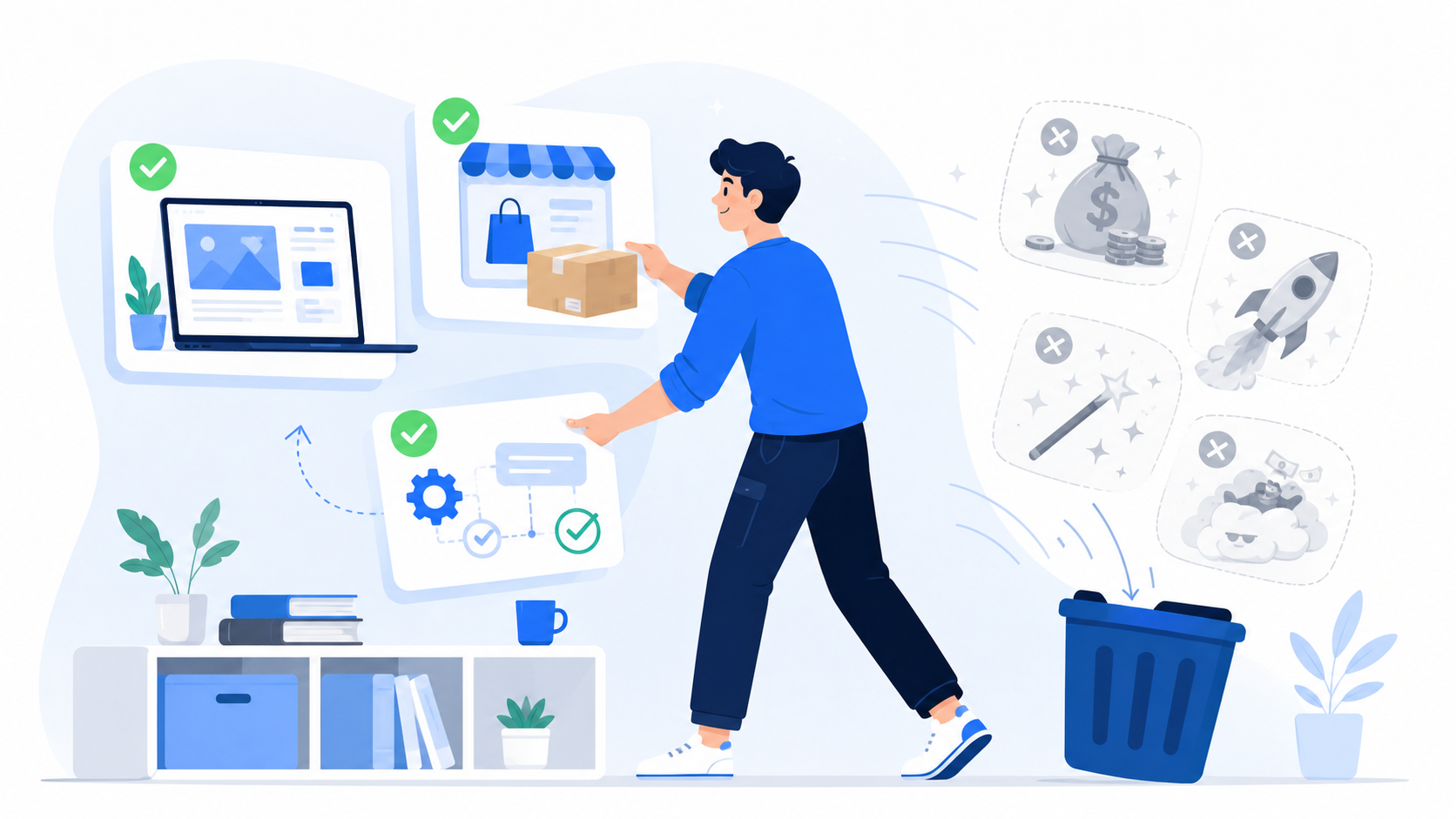
AI side hustle content is everywhere.
Some of it is useful. A lot of it makes starting a business sound much easier than it is.
You may have seen claims about making money with AI ebooks, faceless videos, automated agencies, instant online courses or content businesses that run themselves. The problem is not always the tool. The problem is that many of these ideas skip the most important part of any business: a real customer with a real reason to pay.
AI can help you move faster. It can help you shape ideas, write drafts, organise information and reduce admin. But it does not remove the need for judgement, trust, delivery and responsibility.
A realistic AI-supported side business starts with the same question as any other business: who are you helping, and what problem are you solving?
The problem with most AI side hustle advice
A lot of AI side hustle advice starts in the wrong place.
It begins with the tool, not the customer.
You are told to use AI to create generic ebooks, post faceless content, launch an agency overnight, sell prompts, automate a blog or build a passive income stream. Some people may make money from these routes, but they are rarely as simple as they sound.
The weak ideas usually have the same problems:
- no clear customer
- no clear problem
- no reason someone would choose you
- no proof that anyone wants it
- no delivery process
- no plan for customer questions, complaints or refunds
- no understanding of quality, trust or responsibility
“Make money with AI” is not a business idea. It is a tool category.
A better starting point is: “I use AI carefully to help a specific type of customer get a useful result.”
That keeps the idea grounded.
What AI can realistically help with
AI can be genuinely useful when you treat it as support, not the whole business.
It can help with:
- research
- first drafts
- planning
- admin templates
- customer messages
- content repurposing
- idea comparison
- simple systems
- checklists
- outlines
- FAQs
- email replies
- service descriptions
For example, AI could help you turn a long video into social post ideas, draft a customer onboarding checklist, summarise research, create a basic content calendar or write a first version of a newsletter.
That can save time. It can also help you get unstuck.
But you still need to check the work, improve it, adapt it to the customer and make sure it is accurate. AI output can be bland, wrong, too generic or unsuitable for the situation. Your value is in knowing what to keep, what to change and what not to send.
What AI cannot do for you
AI cannot fully replace the business basics.
It cannot choose a good customer for you. It cannot prove that people will pay. It cannot build trust with someone who is unsure. It cannot take responsibility if the work is poor, misleading or late.
AI also cannot fully understand local context, customer expectations, regulations, tone, relationships or the practical details of delivery.
You still need to answer:
- Who is this for?
- What problem does it solve?
- What does the customer receive?
- What will you charge?
- How will you deliver it?
- What could go wrong?
- What needs checking by a person?
This matters especially if your business touches legal, financial, health, safety, tax, insurance or regulated areas. AI can help you organise questions and draft notes, but it should not be treated as professional advice. Check the latest rules and speak to a relevant professional where needed.
Realistic AI-supported business ideas
The most realistic AI side businesses usually combine a useful skill with a clear customer need.
Here are some grounded examples.
Content repurposing for small businesses
Many small businesses have useful material already: videos, podcasts, talks, blogs, emails, reviews or case studies. They do not always have time to turn that material into posts, newsletters or website updates.
You could offer to repurpose existing content into a simple monthly pack.
For example:
“I help independent consultants turn one long piece of content into LinkedIn posts, newsletter notes and short website updates.”
AI can help with drafts and structure. You still need judgement, editing and an understanding of the customer’s voice.
Admin and documentation support
Small businesses often rely on messy notes, repeated explanations and unclear processes.
You could help create simple documents, checklists, email templates, onboarding notes or customer instructions.
For example:
“I help small service businesses turn repeated tasks into simple checklists and customer email templates.”
AI can help draft the first version. You make it clear, accurate and usable.
Simple website copy support
Many small businesses have websites that are vague, outdated or hard to understand.
You could help them improve basic pages such as services, FAQs, about pages and enquiry sections.
For example:
“I help local service businesses rewrite their website copy so customers can quickly understand what they offer and how to enquire.”
AI can help with structure and wording. You still need to ask good questions and avoid generic copy.
Newsletter support
Some business owners want to email customers regularly but do not know what to say.
You could help plan, draft and tidy newsletters based on their updates, offers, advice or seasonal reminders.
For example:
“I help small businesses send one clear customer newsletter each month.”
AI can help with ideas and drafts. You make sure the message sounds like the business and is useful to the reader.
Research assistant service
Some people need help comparing options, gathering information or preparing summaries.
You could support consultants, small teams, community groups or business owners with organised research packs.
For example:
“I help small business owners compare suppliers, tools or local options and turn the findings into a simple summary.”
AI can help speed up research, but you need to check sources and present the information clearly.
AI setup support for non-technical small businesses
Some small business owners are curious about AI but do not know where to start. They may not want a big transformation project. They may just want help using tools safely for everyday tasks.
You could offer a simple setup session.
For example:
“I help local small businesses set up AI prompts and templates for enquiry replies, content ideas and admin tasks.”
Keep this practical. Avoid promising that AI will replace staff, double sales or run the business.
How to avoid the trap
Before starting any AI side business, ask five questions.
- Who pays?
- What problem is solved?
- What does the customer receive?
- What proof can I show?
- What part needs human judgement?
If you cannot answer those clearly, the idea probably needs more work.
A good AI-supported business is not built around showing off the tool. It is built around helping someone get a result faster, more clearly or with less stress.
Your next step
AI can help you start, but it should not choose the whole business for you.
The best idea is likely to come from your real skills, your available time, your confidence level and the kind of customer you can actually help.
Use the Business Idea Finder to find a business idea that fits your real life, not just a trending tool.
Then read the AI-safe business ideas guide to compare practical options that use AI as support without relying on hype.