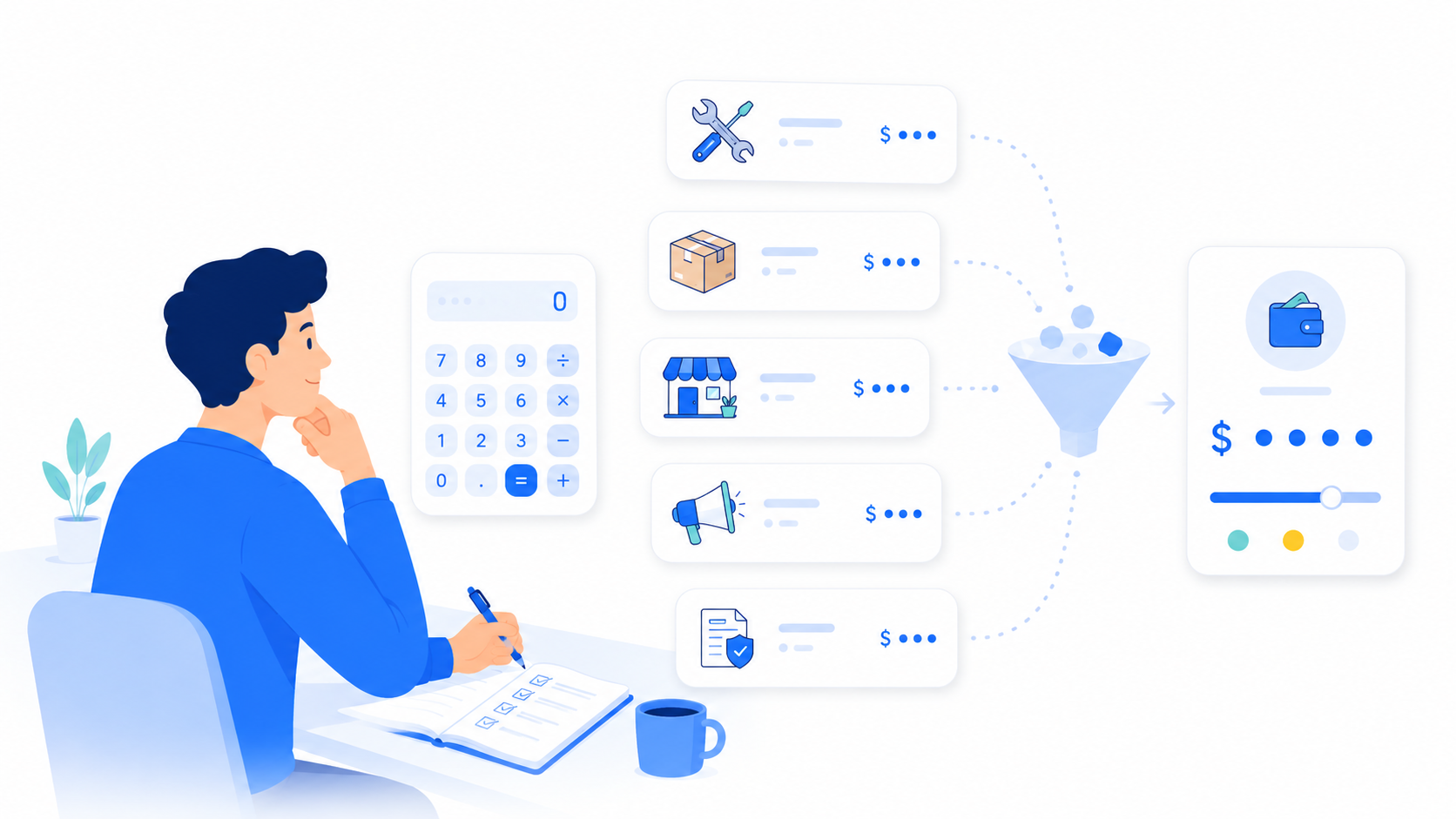
Most people do not get stuck because they refuse to spend money on their business. They get stuck because they do not know which costs matter now, which can wait, and which ones depend on the type of business they are starting.
A dog groomer, freelance designer, mobile mechanic, online shop and bookkeeping service will not have the same startup costs. Some businesses can be tested with a small budget. Others need equipment, stock, insurance, licences, premises or specialist approval before they can safely start.
The aim is not to build the perfect business on day one. It is to work out the smallest sensible version you can test without cutting corners on anything legal, safe or essential.
What this helps with
This guide helps you think through the main startup costs for a small business, including:
- registration and setup
- insurance
- licences, checks or qualifications
- tools, equipment and stock
- website, email and profile costs
- basic marketing
- software and admin
- a small cash buffer
This is a practical starting point, not legal, tax, financial or insurance advice. Check the latest rules before you launch, especially if your business involves food, children, health, beauty, transport, financial services, property, alcohol, events or regulated work.
How much does it cost to start a small business?
There is no single honest answer.
A simple service business may be able to start with a few hundred pounds if you already have the skills and equipment. A product business may need more because of stock, packaging and postage. A local trade or mobile service may need tools, insurance, a vehicle, checks and safety equipment. A premises-based business can need several thousand pounds before the first customer walks in.
A useful way to plan is to split your costs into three groups.
1. Costs you may need before you start
These are the costs that let you trade properly, safely and confidently.
Business registration
If you start as a sole trader in the UK, you usually register for Self Assessment with HMRC when you need to report your self-employed income. GOV.UK says sole traders must tell HMRC by 5 October after the tax year they need to submit a return for.
If you set up a limited company, you pay Companies House incorporation fees. As of 1 February 2026, digital company incorporation is listed at £100, with a digital confirmation statement fee of £50.
For many first-time starters, the question is not “Which structure sounds more official?” It is “Which setup fits the risk, income, admin and plans for this business?” For anything specific, speak to an accountant.
Insurance
Some businesses need insurance before they take on work. This might include public liability, professional indemnity, product liability, tools cover, stock cover, vehicle cover or treatment risk cover.
If you employ someone, employers’ liability insurance is usually a legal requirement. GOV.UK says you must get it as soon as you become an employer, with cover of at least £5 million from an authorised insurer.
Do not guess this. Check what your business type, contracts, customers, venue, landlord or marketplace require.
Licences, checks and permissions
Some businesses need approval before trading. Examples may include food businesses, childcare, beauty treatments, waste removal, taxis, alcohol sales, street trading, events, music use, financial services or certain health-related work.
This is one area where trying to “start cheap” can create expensive problems later. Check your local council, regulator or professional body before taking bookings.
Data protection
If you collect or use personal information for your business, you may need to check whether you must pay the ICO data protection fee. The ICO says organisations, including sole traders, that use personal information need to pay unless they are exempt. GOV.UK lists the annual fee as £52 or £78 for most organisations, including many small and medium-sized businesses.
2. Costs that depend on your business model
These costs are not the same for every starter business.
Equipment and tools
This could be a laptop, phone, camera, cleaning kit, trade tools, treatment bed, printer, card reader, safety equipment, storage, packaging station or delivery bag.
Before buying everything new, ask:
- What do I need to deliver the first paid job properly?
- What can I borrow, rent or delay?
- What would make the business look credible, not overbuilt?
- What would be unsafe or unprofessional to skip?
Stock and materials
Product businesses often need money upfront for stock, ingredients, packaging, labels, postage materials and storage.
A common mistake is buying too much stock before proving demand. Start with a small test range where possible. You can learn from ten real orders faster than from a cupboard full of products nobody has asked for yet.
Website, email and online presence
You do not always need a large website to begin. Many small businesses can start with:
- a clear hosted business profile
- a simple offer page
- a business email address
- a price list or enquiry form
- a small number of good photos
- a few social media posts that explain what they do
A domain, email account, website builder, booking tool or profile service may be worth paying for, but only if it helps a customer understand, trust or contact you.
Software and admin
You may need software for accounting, invoices, bookings, design, email, payments, customer records, stock or project management.
Keep this simple at the start. The best system is the one you will actually use. A small business with three customers does not need the same setup as a business with staff, stock and hundreds of monthly orders.
Marketing and first customer costs
Marketing does not have to mean a large ad budget. Early costs might include:
- photos of your work
- flyers or business cards
- a local directory listing
- a small social media test
- samples
- signage
- introductory offers
- portfolio work
- a simple landing page
The goal is not to “build a brand” in the abstract. The goal is to help the right person understand what you offer and how to enquire.
3. Costs people often forget
These are the costs that can catch new starters out.
A cash buffer
Even a small business needs breathing room. You may need to pay for materials before the customer pays you. You may have quiet weeks. You may need to replace a broken tool, refund an order, pay for parking, cover postage, or wait for an invoice to clear.
A buffer does not guarantee success, but it can stop one small problem becoming a crisis.
Tax money
Your first payments may feel like profit, but not all of that money is yours to spend. Put money aside for tax early. The right amount depends on your income, expenses, structure and wider situation, so get proper advice if you are unsure.
Also keep an eye on VAT as you grow. GOV.UK says you need to register for VAT if you go over the registration threshold, which is based on taxable turnover. The VAT registration threshold increased to £90,000 from 1 April 2024.
Your own unpaid time
Startup costs are not only money. They also include evenings, weekends, admin, learning, mistakes and decisions.
Be realistic. A business that costs £150 to start but takes 20 unpaid hours a week may not be cheap if you already work full-time or have caring responsibilities.
A simple startup cost checklist
Use this as a first pass.
Setup
- Business structure chosen
- HMRC or Companies House steps checked
- Business name checked
- Separate bank account considered
- Basic records system set up
Legal, tax and safety
- Licences or permissions checked
- Insurance needs checked
- Data protection fee checked
- VAT threshold understood
- Terms, policies or contracts considered
Delivery
- Tools and equipment listed
- Stock or materials listed
- Packaging or postage costs checked
- Supplier costs checked
- Quality and safety requirements checked
Customer setup
- Offer written clearly
- Price list drafted
- Contact method set up
- Hosted profile or website created
- Photos, examples or portfolio prepared
- First enquiry message ready
Money
- Startup budget written down
- Monthly running costs estimated
- Tax money plan created
- Small cash buffer considered
- Break-even point roughly understood
Practical next step
Do not start by asking, “How much does a business cost?”
Start with this question:
What is the smallest version of this business I can test properly?
Then write down:
- what you are selling
- who it is for
- what you need before you can safely sell it
- what can wait until after the first few enquiries
- the minimum budget needed to test it
That gives you a clearer answer than a generic startup cost estimate.
CTA
View the Checklist
Use the Yawise Start checklist to turn your idea into a practical setup list, including costs, first-customer steps and what to check before you launch.
FAQs
Can I start a small business with no money?
Sometimes, but not always. You may be able to research, plan, write your offer, create a basic profile and speak to potential customers without spending much. But most real businesses have some costs, even if they are small. Insurance, equipment, materials, registration, licences or software may be needed depending on what you do.
What is the cheapest small business to start?
Usually, the cheapest businesses are simple service businesses where you already have the skill and equipment. Examples might include admin support, tutoring, consulting, writing, design, social media support or local services. Cheap does not always mean easy. You still need a clear offer, customers and time to deliver the work properly.
Should I buy everything before I launch?
No. Buy what you need to deliver the first version safely and professionally. Delay anything that is mainly about looking bigger than you are. Many new starters waste money on logos, websites, stock or software before they have tested whether anyone wants the offer.
Do I need a website straight away?
Not always. You do need a clear way for customers to understand what you offer and contact you. For some businesses, a hosted business profile, simple page or well-written social profile may be enough to test the idea before building a full website.
What startup costs should I not avoid?
Do not avoid costs linked to safety, legal requirements, insurance, licences, customer protection or proper delivery. Saving money is sensible. Cutting corners on essentials is not.