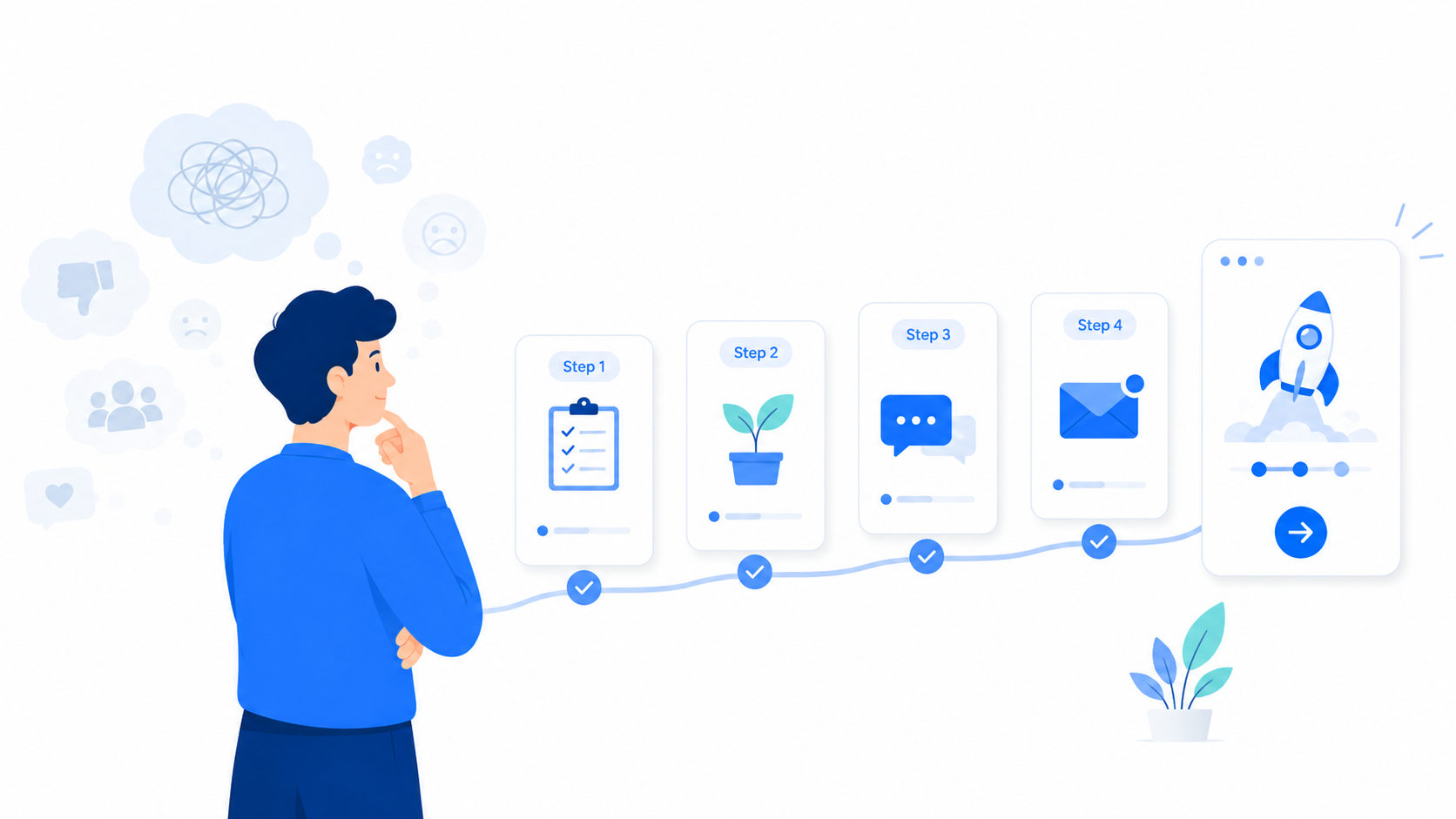
Most people do not talk about this part of starting a business.
They talk about ideas, websites, logos, funding and customers. They do not always talk about the awkward feeling that comes with saying, “I am starting something.”
You might worry people will judge you. You might feel silly posting online. You might not want friends, family or old colleagues to see you trying something new. You might be scared of launching publicly and then having nothing happen.
That does not mean you are not suited to business. It means you are human.
Starting a business can feel exposing, especially when it is your first one. The aim is not to suddenly become confident overnight. The aim is to take a small, sensible first step without putting too much pressure on yourself.
Why starting a business can feel embarrassing
Feeling embarrassed usually comes from one of a few places.
You may worry that your idea is not good enough yet. You may feel uncomfortable calling yourself a business owner before you have customers. You may be concerned that people will think you are trying to be something you are not.
There is also the fear of being seen starting.
That can feel worse than the work itself. It is one thing to quietly research an idea. It is another thing to tell people, make an offer, share a price or ask for a first enquiry.
But business does not have to begin with a big announcement. You can start in a quieter, more practical way.
You do not need to announce everything at once
A common mistake is thinking you need to launch publicly before you are ready.
You do not.
You can start by testing a simple version of your idea with a small group of people. You can write a basic offer before building a full brand. You can speak to three potential customers before creating a website. You can set up a simple profile before posting every day on social media.
Embarrassment often gets worse when the first step feels too public.
So make the first step smaller.
Instead of:
“I am launching my new business.”
Try:
“I am testing a small service to see whether it is useful.”
Instead of:
“Please support my new brand.”
Try:
“I am looking for feedback from people who might need this.”
That language feels more honest because it is. You are not pretending everything is finished. You are testing a realistic starting point.
Start with a small version of the business
You do not need the perfect business name, full website, polished brand, printed materials and complete content plan before you begin.
Start with the smallest useful version.
That could be:
- one clear service
- one simple product
- one price list
- one short description of who it helps
- one way for people to enquire
- one checklist of what you need before taking paid work
For example, instead of launching a full cleaning business, you might test weekend deep cleans for local households.
Instead of launching a full coaching brand, you might offer one paid planning session for a specific problem.
Instead of opening a full online shop, you might test five products with a small audience first.
This will not remove all nerves, but it gives you something concrete to work with.
Choose a private first step
When you feel embarrassed, a public first step can feel too heavy.
Choose a quieter action first.
You could:
- write your business idea in one sentence
- list who the idea is for
- work out what problem it solves
- create a simple starter offer
- ask one trusted person for feedback
- research prices
- check whether you need insurance, licences or qualifications
- create a basic hosted business profile
- send one private message to a possible customer
The point is to move from thinking to testing without forcing yourself into a big public launch before you are ready.
Use simple words when talking about your idea
Sometimes embarrassment gets worse because people feel they need to sound impressive.
You do not need startup language. You do not need to call yourself a founder. You do not need to pretend you are building something huge.
Use plain words.
Try this structure:
“I am testing a small business idea helping [type of person] with [problem]. I am starting with [simple offer] and seeing what people need.”
Examples:
“I am testing a small admin service for busy sole traders who need help keeping on top of emails and basic documents.”
“I am starting with simple birthday cakes for local families before deciding whether to offer a wider menu.”
“I am putting together a small social media setup service for local businesses that need their profiles tidied up.”
That sounds grounded. It does not overclaim. It gives people enough information to understand what you are doing.
Do not ask everyone for their opinion
Not every opinion will help you.
Some people will be supportive. Some will project their own fears onto you. Some will question the idea before they understand it. Some may make jokes because they are uncomfortable seeing you try something new.
You do not need approval from everyone before you start.
Choose feedback carefully. Ask people who are either potential customers or people who can give calm, practical advice.
A useful question is:
“Would this be clear enough for someone to understand what I offer?”
Another useful question is:
“What would you need to know before enquiring?”
Avoid asking:
“Do you think this is a good idea?”
That question is too broad and often leads to vague opinions. Better questions help you improve the offer.
Build confidence through evidence, not pretending
You do not have to feel confident before you begin.
Confidence often comes after you have evidence. Evidence might be one helpful conversation, one person saying they would pay, one enquiry, one small sale, one useful piece of feedback or one completed job.
That is why testing matters.
A first business does not need to prove your whole future. It only needs to answer the next practical question:
- Does anyone understand this offer?
- Does anyone need it?
- Would someone pay for it?
- What would make it clearer?
- What do I need before doing this properly?
Each answer gives you more structure.
Create a low-pressure first offer
If you are nervous, avoid starting with a complicated offer.
A simple first offer is easier to explain and easier to test.
It should include:
- who it is for
- what you will do
- what is included
- what is not included
- the price or price range
- how someone can enquire
- any limits, such as location, availability or number of spaces
Example:
“I am offering a one-hour home organisation session for people who want help sorting one cupboard, wardrobe or small room. It is £35 for the first session while I test the service locally. Message me with a photo of the space and I will let you know whether I can help.”
This is not trying to be perfect. It is clear enough for someone to act.
Separate your business from your identity
One reason starting feels embarrassing is that it can feel personal.
If nobody buys, you may feel rejected. If someone criticises the idea, it may feel like they are criticising you.
But an early business idea is not your identity. It is a test.
The question is not, “Am I good enough?”
The better question is, “Is this offer clear, useful and realistic for the people I want to help?”
That shift matters. It turns embarrassment into information.
Make your first public step smaller
At some point, people need to know what you offer. But that does not mean you need to make a big dramatic post.
You can start with a small, factual update.
For example:
“I am testing a small [service/product] for [type of customer]. I am starting with [specific offer]. If this sounds useful, send me a message and I will share the details.”
Or:
“I am putting together a small list of people who may want [service/product] when I open a few early slots. Message me if you would like the details.”
Or:
“I am collecting feedback on a new idea before I launch it properly. It is for people who need help with [problem]. Happy to send the details if relevant.”
This gives people a way to respond without making the launch feel bigger than it is.
What to avoid when embarrassment is holding you back
Try not to hide forever behind preparation.
It is easy to keep changing the logo, rewriting the bio, researching competitors or waiting until you feel more ready.
Preparation helps, but only up to a point. At some stage, you need contact with real people.
Also avoid spending money just to feel more legitimate. A paid logo, expensive website or large stock order will not remove the fear of being seen. Start with the basics first.
Focus on:
- a clear offer
- a realistic price
- a simple enquiry route
- any legal, tax, insurance or licence checks needed
- one small way to test demand
This is a practical starting point, not legal or financial advice. Check the latest rules before you launch, especially if your business involves food, children, health, beauty, finance, property, regulated work or specialist services.
A simple next step
Write down one sentence:
“I help [type of person] with [problem] by offering [simple product or service].”
Then write three things underneath:
- What would I need before offering this properly?
- Who could I ask for useful feedback?
- What is the smallest version I could test first?
You do not need to announce everything today. You do need to stop carrying the idea around with no structure.
Use Yawise Start to make the next step clearer
Yawise Start helps you move from “I might start something” to “I know what to do next.”
You can use it to:
- check whether you are ready to start
- find a practical business idea that fits your time, budget and skills
- follow a launchpad for your type of business
- work through a checklist before you take your first customer
- create a hosted business profile when you are ready to be found
Feeling embarrassed does not mean you should give up. It may simply mean your first step needs to be smaller, clearer and less public.
Practical next step: Take the Business Readiness Quiz or use the Find Your Business Idea Quiz to choose a starting point that fits your real life.
FAQs
Is it normal to feel embarrassed about starting a business?
Yes. Many people feel awkward at the beginning, especially if they have never sold something, posted about an offer or called themselves a business owner before. It does not mean you cannot start. It means you may need a quieter, more structured first step.
Should I tell people I am starting a business?
You do not need to tell everyone straight away. Start by speaking to a few useful people, testing your offer and getting feedback. When you are ready, you can share a simple update instead of making a big launch announcement.
What if people judge my business idea?
Some people might. That does not automatically mean the idea is bad. Focus on feedback from people who understand the problem, might buy from you or can give practical advice. Do not build your whole decision around casual comments from people who are not your target customers.
Can I start a business quietly?
Yes. You can research, plan, test, create a simple offer, speak to potential customers and build a basic profile before making anything widely public. Quiet progress still counts.
What is the best first step if I feel nervous?
Start by writing one clear sentence about what you want to offer and who it helps. Then test that idea with one trusted person or potential customer. Keep the first step small enough that you can actually do it.